
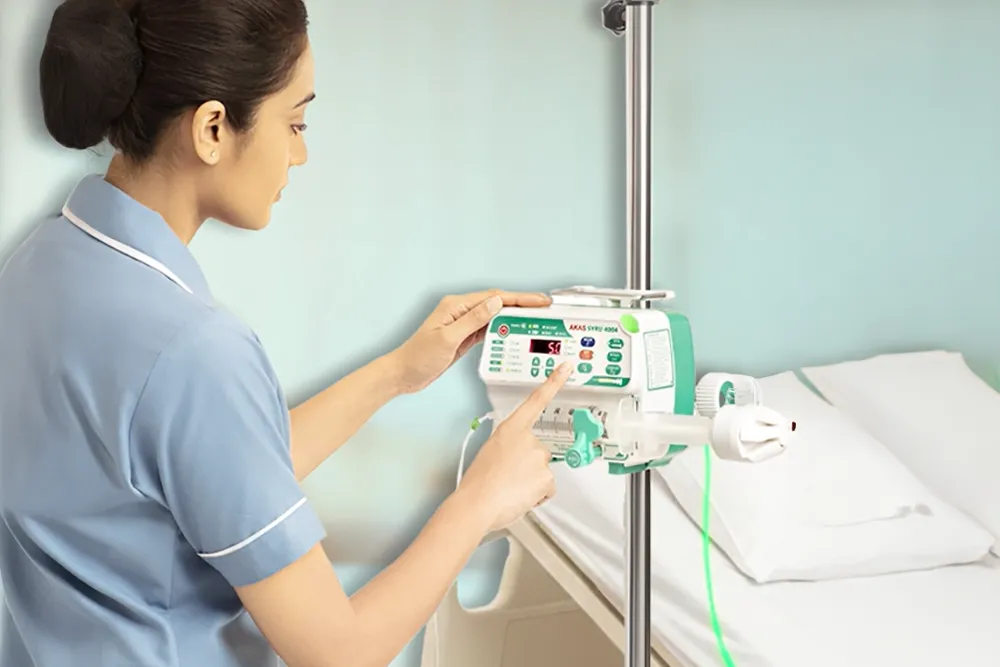
The Importance of Micro-Dose Accuracy: How Advanced Syringe Pumps Support Neonatal & Paediatric Care
Why Micro-Dose Accuracy Matters
Because of this vulnerability, syringe pumps used in NICUs and PICUs are expected to deliver medications with a guaranteed accuracy within about ±3% or better, significantly tighter than many standard volumetric pumps. This level of precision is especially critical for vasoactive agents, inotropes, insulin, prostaglandins, anticonvulsants, and analgesics frequently used in neonatal and Paediatric intensive care.
Role of Syringe Pumps in Neonatal Care
- Fine control over very small volumes, reducing the need for frequent manual injections and the risk of missed doses.
- Reduced line manipulation, which lowers infection risk and minimises hemodynamic instability in critically ill neonates.
- Ability to compensate for line resistance and height differences, which can otherwise impact flow when delivering micro‑infusions.
In many units, syringe pumps have replaced gravity infusions for high‑risk drugs, significantly improving safety when caring for extremely low birth weight infants.
Paediatric Infusion Pump Needs
- Complex dosing calculations in mg/kg or mcg/kg/min.
- Frequent therapy changes during acute illness require reprogramming and vigilance.
- Multi‑infusion setups through limited venous access can alter flow dynamics and drug concentration if not carefully managed.
Advanced Syringe Pump Technology
- High‑precision stepper motors and refined screw mechanisms that maintain consistent flow at very low rates.
- Integrated pressure monitoring to detect occlusions early and minimise sudden bolus release when lines are cleared.
- Drug libraries and dose error reduction software that flag out‑of‑range dosing and concentration entries before infusion starts.
- Event logs and connectivity capabilities that support documentation, quality improvement, and integration with hospital information systems.
For AKAS Infusions, aligning these capabilities with local clinical needs means creating syringe pumps that are not only technically sophisticated but also intuitive for busy bedside nurses.
Putting Accuracy into Everyday Practice
- Standardised drug concentrations and clear neonatal/paediatric infusion guidelines.
- Regular staff training and competency checks in pump operation and troubleshooting.
- Protocols for multi‑infusion management, line labelling, and double‑checks for high‑alert medications.
When technology and best practice align, syringe pumps become powerful partners in delivering consistent, high‑quality care to the smallest patients.